
Out here in the mountains, a lot of the homes I inspect run on a private well. And when the buyer is using an FHA loan, sooner or later somebody asks me the same question: "Does the lender need a water test?"
Sometimes yes, sometimes no, and the rules are more specific than most folks expect. I've been around houses since 2001, building, remodeling and selling building materials before I ever started inspecting, and I've learned it's a lot cheaper to sort out a well question in week one of due diligence than the week before closing.
So here's what FHA's own handbook says, in plain English, and how it plays out in North Carolina. One honest note up front: I'm an inspector, not a lender. Your loan officer and underwriter make the final call on what your loan needs. My job is to help you get a clean, usable water test and understand the results.
The short version
FHA's rules live in the HUD Single Family Housing Policy Handbook 4000.1. The well water rules are in section II.A.3.a.ii(N)(2), "Individual Water Supply Systems (Wells)" ( HUD Handbook 4000.1, rev. 8/12/2026). Boiled down:
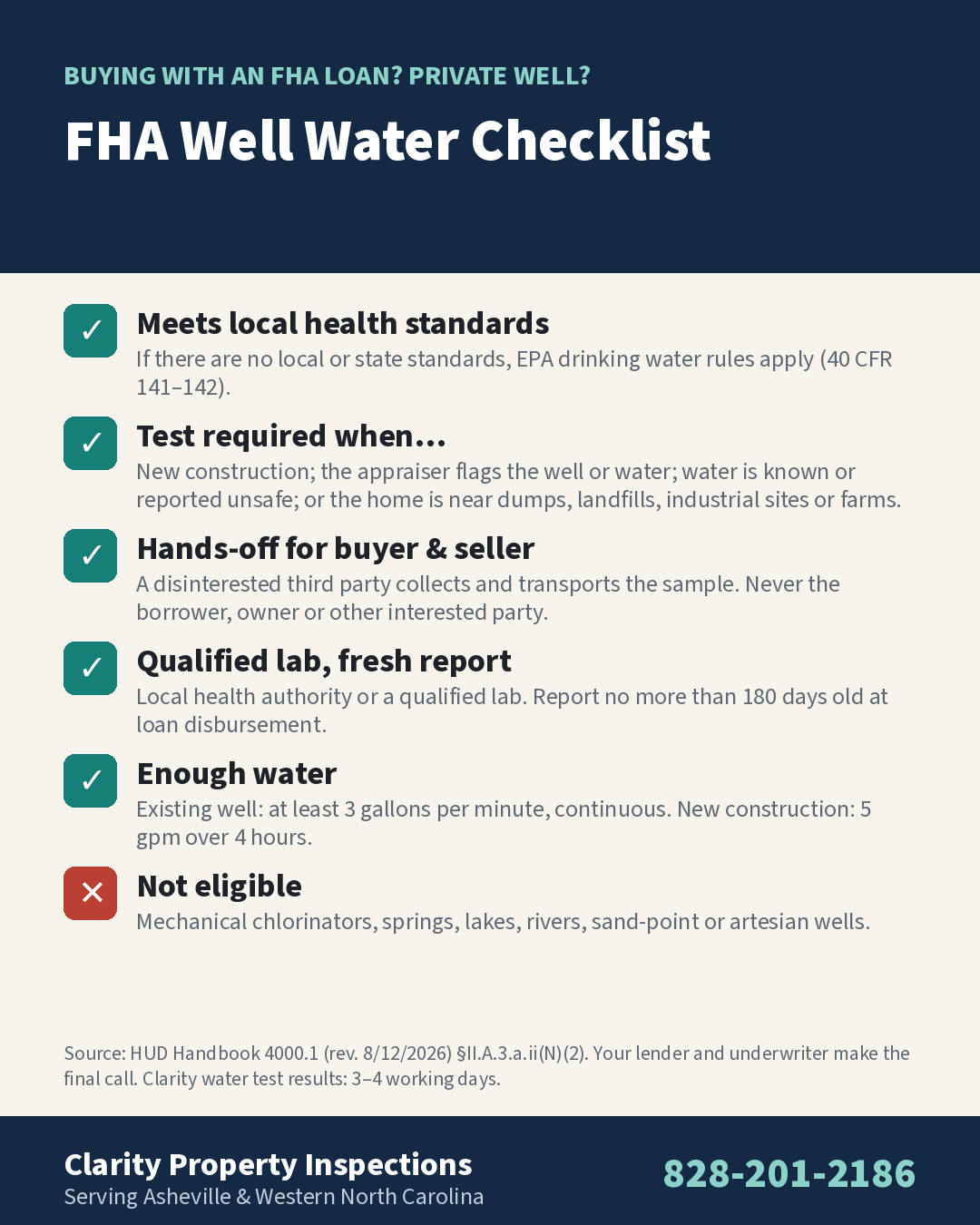
- The water has to meet the standards of the local health authority. If there are no local or state standards, it has to meet EPA's National Primary Drinking Water Regulations (40 CFR 141–142).
- A water test is required in certain situations (below), and the lender can ask for one in others.
- The sample has to be collected and carried to the lab by a disinterested third party. The buyer, the seller and other interested parties can't do it.
- When a test is required, the report can't be more than 180 days old on the day the loan funds.
When FHA requires a well water test
The handbook says a well water test is required "for, but not limited to," properties ( HUD 4000.1 §II.A.3.a.ii(N)(2)(a)):
- that are newly constructed;
- where the appraiser has reported problems with the well or the well water;
- where the water is reported or known to be unsafe; or
- that are close to dumps, landfills, industrial sites, farms (pesticides) or other sites that could hold hazardous waste.
That "not limited to" matters. It means the list is a floor, not a ceiling. Plenty of lenders ask for a test on any home with a well, so ask your loan officer early instead of assuming you're off the hook.
What the appraiser is told to watch for
FHA's appraiser rules (§II.D.3.o.v) tell the appraiser to note readily observable well problems and require a test or inspection if any of these apply ( HUD 4000.1):
- the water relies on a purification system because of contaminants;
- corroded plumbing pipes;
- intensive farming within a quarter mile;
- coal mining or gas drilling within a quarter mile;
- a dump, junkyard, landfill, factory, gas station or dry cleaner within a quarter mile; or
- water with an unusually objectionable taste, smell or appearance.
In our part of the state, the farm and "taste, smell or appearance" items are the ones I'd watch. If the water smells like sulfur or leaves orange stains in the tub, expect questions.
Who can take the sample (and who can't)
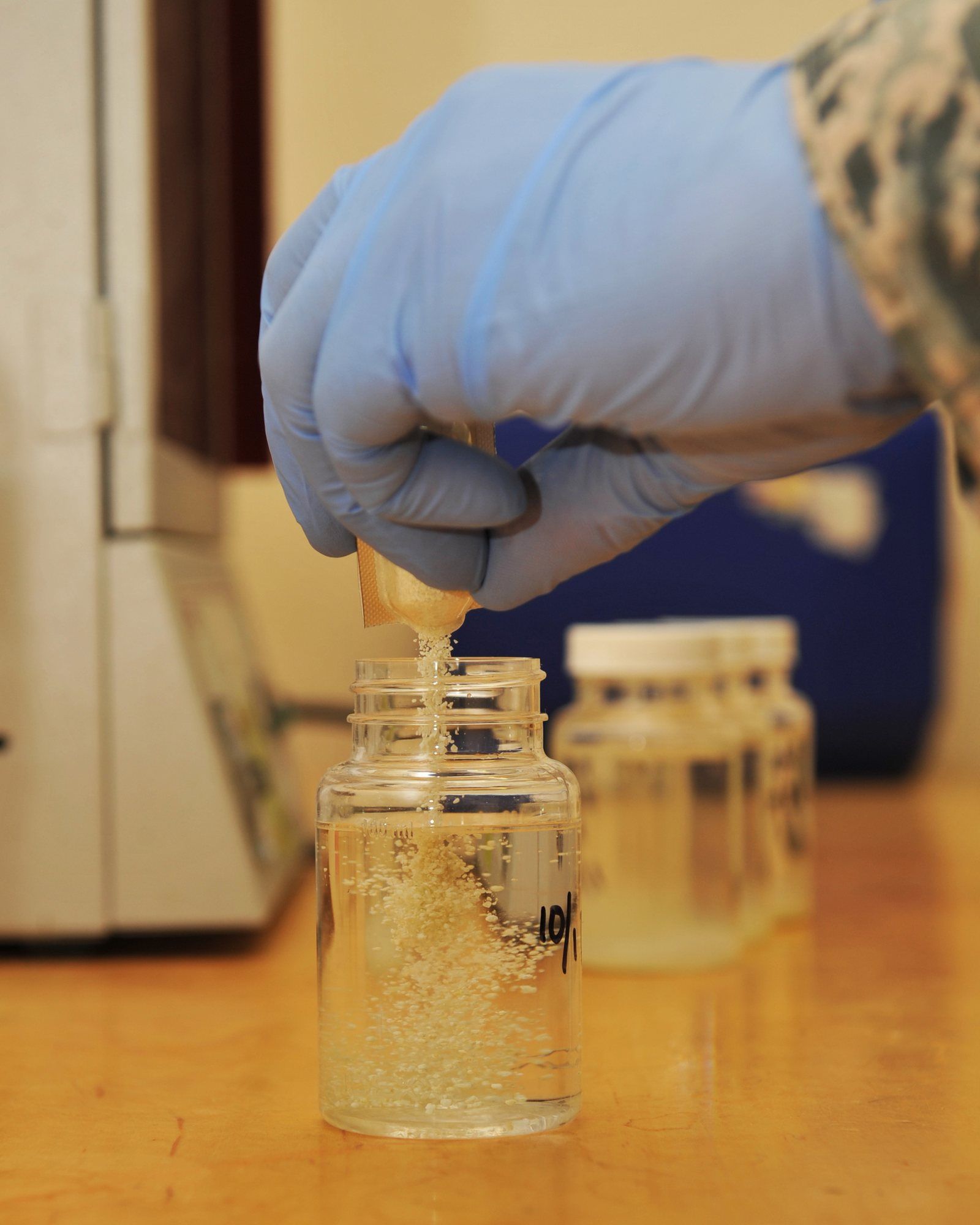
This is the part that trips people up. FHA says all testing must be done by a disinterested third party, and that includes collecting and transporting the sample. The sample has to be collected and tested by the local health authority, a commercial testing lab, a licensed sanitary engineer, or another party acceptable to the local health authority. And the handbook is blunt: at no time can the borrower, the owner or another interested party collect or transport the sample ( HUD 4000.1 §II.A.3.a.ii(N)(2)(a)).
So a seller filling a bottle at the kitchen sink and dropping it off at the lab won't work for an FHA file, even if the results look great. Neither will the buyer doing it.
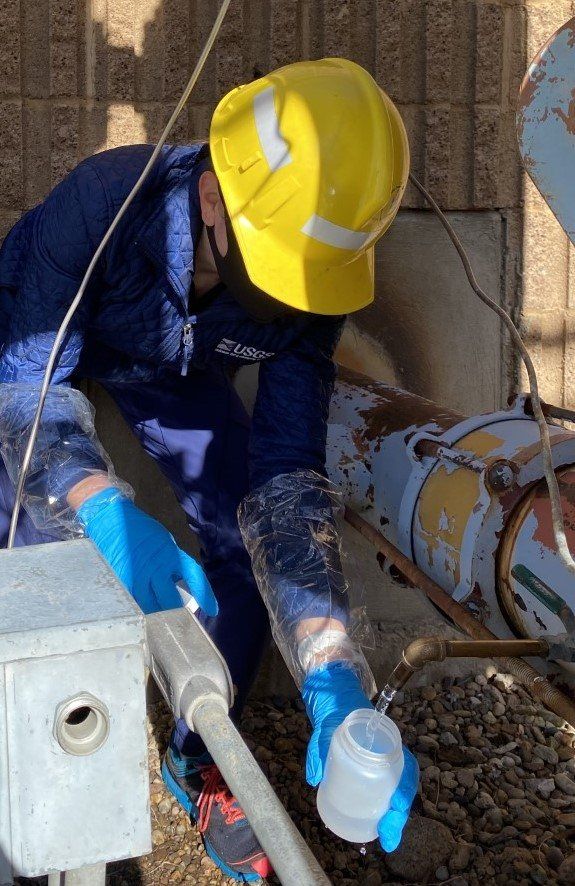
When I take a sample, I collect it myself following the lab's instructions and get it to one of the labs we work with. I'm not the buyer, the seller or anybody's agent. That said, whether a particular collector and lab are acceptable is your lender's call, so I always suggest buyers and loan officers confirm that before I sample.
What the water has to meet in North Carolina
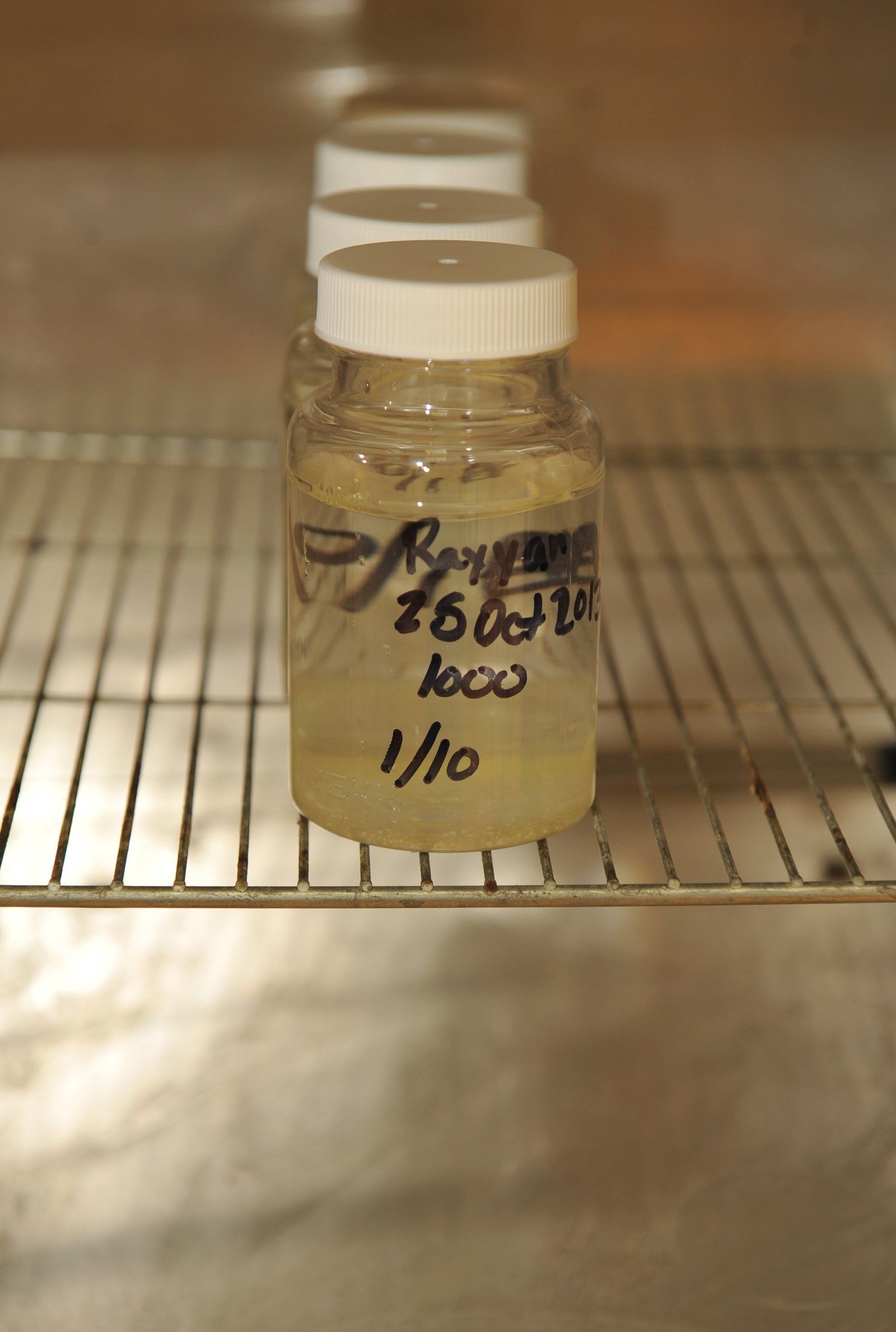
FHA says the water quality must meet the requirements of the health authority with jurisdiction, and if there are no local or state standards, EPA's drinking water standards apply. The documentation rule says the lender must get a valid water test from the local health authority or a lab qualified to do water testing in the state or locality ( HUD 4000.1 §II.A.3.a.ii(N)(2)(b)). FHA's handbook does not list one standard set of tests for every loan, so the lender decides which tests it wants.
A little North Carolina background helps here. NC law requires new private wells to be tested within 30 days of being built, but after that, testing is up to the owner ( NCDHHS Private Wells; NCDHHS testing FAQ). On an older mountain home, the last test might have been years ago, or never. NCDHHS also notes that many NC wells have too much lead, arsenic, iron or manganese, low pH, or harmful bacteria, and recommends testing:
- every year for total and fecal coliform bacteria;
- every two years for heavy metals, nitrates, nitrites, lead and copper;
- every five years for pesticides and volatile organic compounds (VOCs);
- and after flooding, well repairs, or any change in taste, color or smell.
Your county health department's environmental health office can also test well water; procedures and fees vary by county ( NCDHHS testing FAQ).
How far the well has to be from the septic system
For existing homes, FHA's handbook has a minimum-distance table between the well and sources of pollution ( HUD 4000.1 §II.A.3.a.ii(N)(2)(a)):
- Property line: 10 feet
- Septic tank: 50 feet
- Drain field: 100 feet, reduced to 75 feet if the local authority allows it
- If the local authority's distances are greater, the local distances prevail.
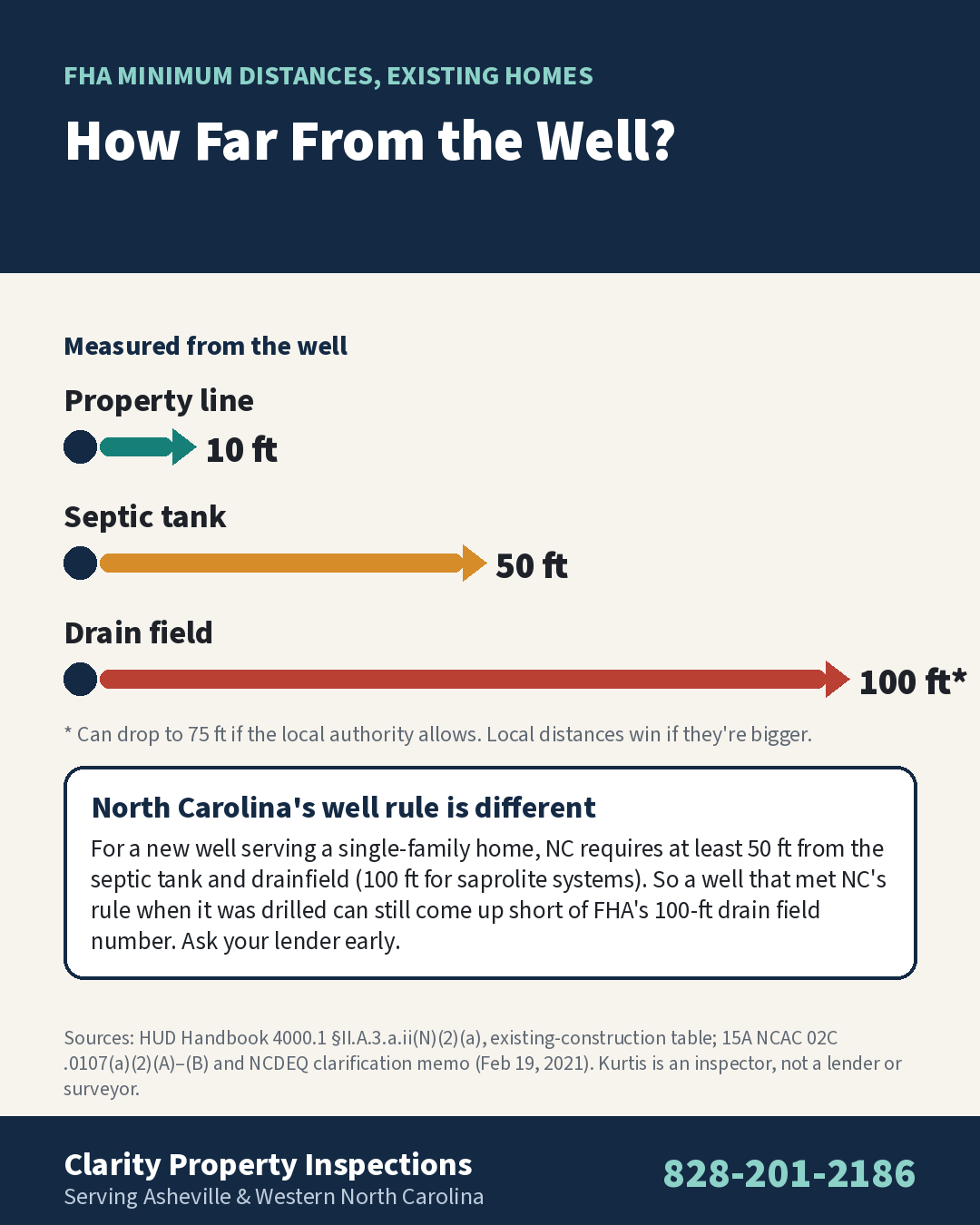
Here's the wrinkle in North Carolina. The state well construction rule, 15A NCAC 02C .0107(a)(2), sets the minimum separation for a well serving a single-family home at 50 feet from the septic tank and drainfield, including the repair area, or 100 feet if it's a saprolite system ( NCDEQ clarification memo, Feb. 19, 2021). That's smaller than FHA's 100-foot drain field number. So a well that was perfectly legal under NC rules when it was drilled could still come up short on an FHA loan.
FHA doesn't require the appraiser to measure these distances, but the appraiser is supposed to know them, comment if they can tell, and ask for a survey or other paperwork showing the separation when it's available ( HUD 4000.1 §II.D.3.o.v). If the septic permit or a site plan shows where the drain field is, get it to your lender early. On steep lots, the well, tank and lines can be closer together than you'd think.
Other well items FHA looks at
A few more rules from the same handbook sections that I see come up:
- Water flow: an existing well has to deliver a continuous flow of at least 3 gallons per minute. New construction wells need 5 gallons per minute over at least four hours.
- Not eligible: a water source with a mechanical chlorinator, or one served by springs, lakes, rivers, sand-point wells or artesian wells.
- Pressure tank: at least a 42-gallon tank, or a pre-pressurized tank or device that delivers as much water between pump cycles.
- A well inside the foundation walls of an existing home gets flagged unless the local jurisdiction permits it, it's common in the area, and it doesn't hurt marketability.
- Water treatment: if the home needs a purification system because of contaminants, the handbook has a separate set of rules for that equipment, its maintenance and escrow (§II.A.3.a.ii(O)). Ask your lender how that applies.
All from HUD 4000.1 §II.A.3.a.ii(N)(2), §II.A.3.a.ii(O) and §II.D.3.o.v.
If you want somebody to look at the well equipment itself, not just the water, I also offer a separate well inspection. Pricing for both is on the price list.
How I handle a lender water test
- Ask your lender which tests they need and whether there's a required lab or collector. FHA leaves those details to the lender, so this one call saves a lot of trouble.
- Add water testing when you book your home inspection. My Lender package covers E. coli, coliform, lead, nitrate and nitrite. There's also a Basic package (E. coli and coliform), a Premium package, and add-ons like arsenic. Details are on the water testing page, and current pricing is on the price list.
- I collect the sample at the inspection, following the lab's instructions and, where possible, before any filters or softeners.
- Results come back in 3 to 4 working days. You get the lab report plus a plain-English summary, and I'm glad to walk you through it on the phone.
- Mind the clock. If a test is required, the report can't be more than 180 days old when the loan funds. Testing during due diligence usually lands well inside that window.
Your home inspection report, with photos and video, comes within 24 hours, so you'll have both in hand early.
If a result comes back high, it doesn't automatically kill the deal. I'll explain what it means and point you to the right next step: a licensed well contractor, a water treatment pro, or disinfecting and retesting. NCDHHS also recommends retesting after well repairs ( NCDHHS testing FAQ).
I serve buyers all over the area, from Asheville to Weaverville, Mars Hill, Black Mountain, Hendersonville, Waynesville and Sylva.
What a sample report looks like
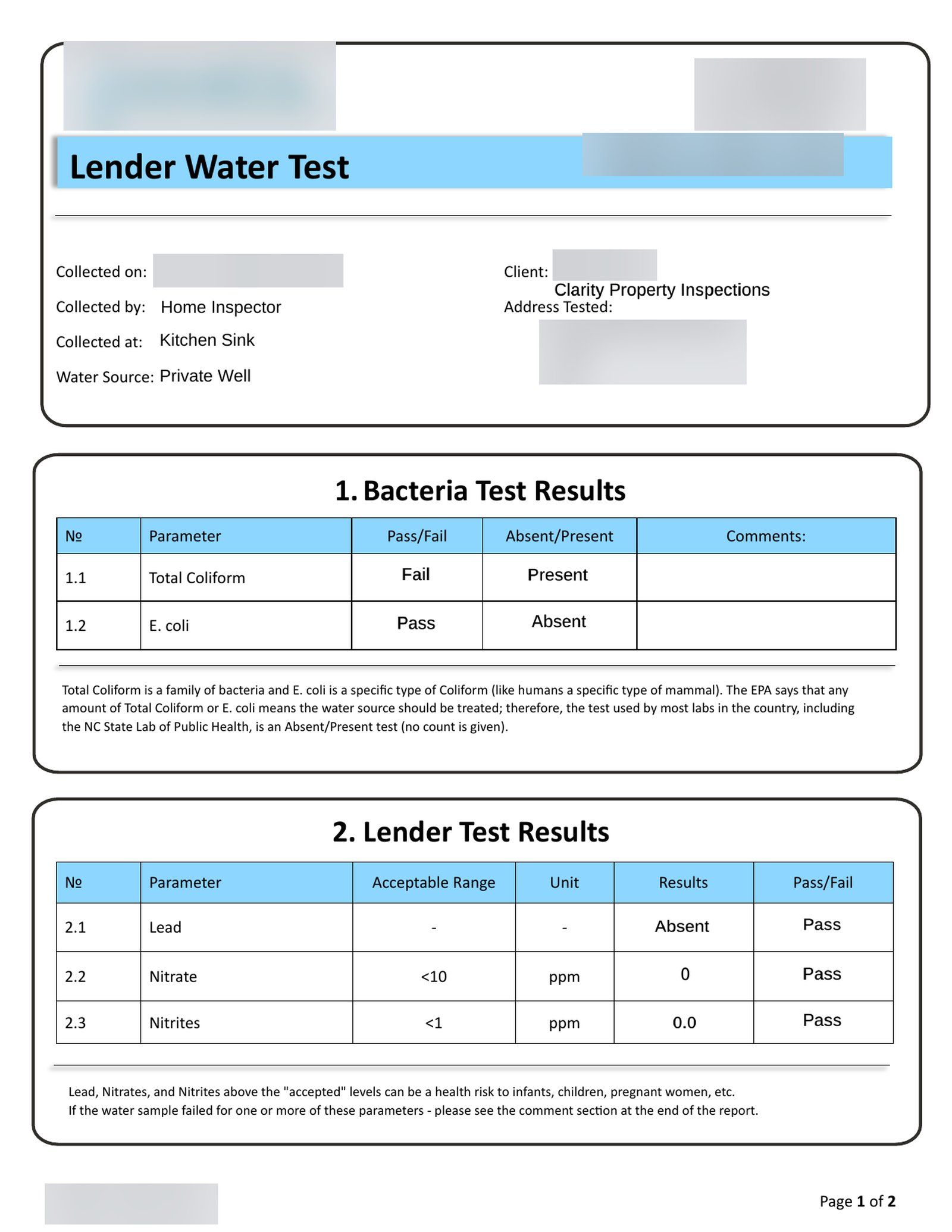
If you've never seen a lender water test report, here's one. It's a real report from a lender test I collected, with the lab's name and contact details, the client's information, the property address, the dates, the report numbers and the lab staff's names and signature blurred for privacy.
The top of page 1 shows how the sample was taken: where it was collected (the kitchen sink), who collected it (the home inspector, not the buyer or seller) and the water source (a private well). That's the third-party collection FHA asks for, in writing.
Next come the bacteria results. Total coliform and E. coli are reported as absent or present, not as a count, and the report explains why. Then the lender panel lists lead, nitrate and nitrite with the acceptable range, the unit, the result and pass or fail for each one.
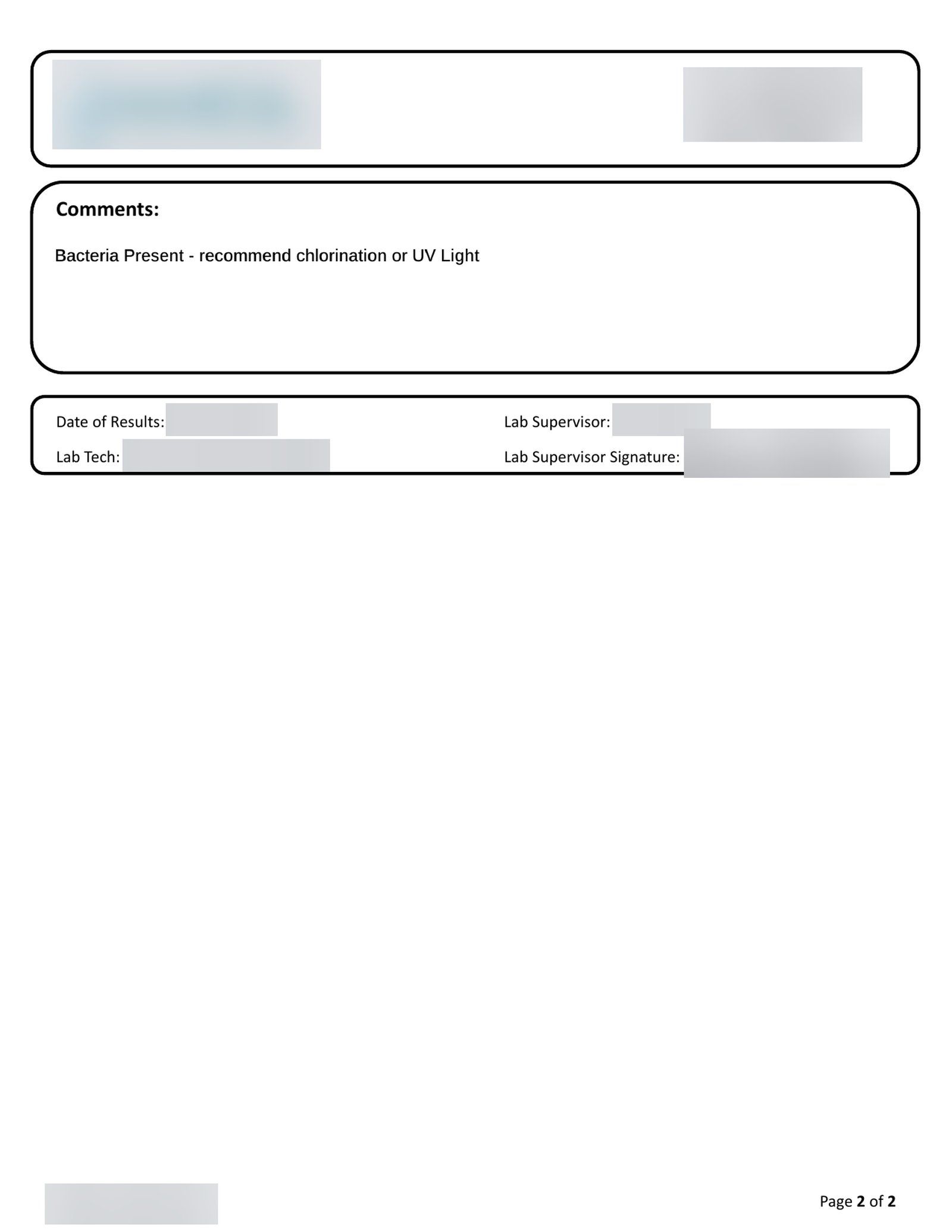
Page 2 is where the lab writes its comments. When something on the panel doesn't pass, this is where you'll find its recommended next step, like disinfecting the well or adding treatment, before a retest.
The results on this report belong to that one sample on that one day. They don't say anything about the water at any other home, and that's exactly why every home with a well gets its own test. When your results come back, I'll go through your report with you line by line.
For loan officers and processors
If you've got an FHA file on a mountain property with a well, here's what I can do to make it easier:
- Collect the sample myself as a third party, per your lab and test list.
- Get results back in 3 to 4 working days, with the lab report attached.
- Note what I see at the wellhead and plumbing during the home inspection.
Send me your required test list and any lab requirements, and I'll match them. If something on your list isn't in one of my packages, call me at 828-201-2186 and we'll sort it out.
Frequently asked questions
Does FHA require a well water test?
Not on every loan. HUD Handbook 4000.1 requires a well water test for, but not limited to, new construction, homes where the appraiser reports well or water problems, homes where the water is known or reported unsafe, and homes near dumps, landfills, industrial sites or farms. Many lenders ask for one on any home with a well, so check with your loan officer.
Can the seller or buyer take the water sample for an FHA loan?
No. FHA requires a disinterested third party to collect and transport the sample. The borrower, owner or other interested party may never collect or transport it.
How old can an FHA well water test be?
When a well test is required, the report can't be more than 180 days old from the date the loan is disbursed.
How far does a well have to be from a septic system for FHA?
For existing homes, FHA lists 10 feet from the property line, 50 feet from the septic tank and 100 feet from the drain field, which can drop to 75 feet if the local authority allows. Local distances apply if they're greater. North Carolina's well rule uses 50 feet from the septic tank and drainfield for single-family homes, so ask your lender how they apply it.
What does your lender water test check, and what does it cost?
Clarity's Lender package tests for E. coli, coliform, lead, nitrate and nitrite. Results take 3 to 4 working days. Current pricing is on the price list.
Book a lender water test
I'm Kurtis Lane, NC Home Inspector License #5741, InterNACHI Certified Professional Inspector, and I bring more than 20 years of construction experience to every inspection. If you're buying a home with a well, or you're a lender with one in the pipeline, let's get the water test lined up early.
- Call or text: 828-201-2186
- Book online: https://app.spectora.com/home-inspectors/my-inspection-company-cee2ccb4d2/schedule
- Water testing: https://www.clarityinspectors.com/water-testing
- See current pricing: https://www.clarityinspectors.com/price-list
Serving Asheville & Western North Carolina.
Photo credits: Well sampling photo by the U.S. Geological Survey, New Mexico Water Science Center ( Wikimedia Commons, public domain). Lab photos by Master Sgt. David Miller, U.S. Air Force ( 1, 2, Wikimedia Commons, public domain). Use of these photos does not imply endorsement by USGS or the U.S. Air Force. Graphics and the sample report by Clarity Property Inspections; identifying details on the sample report are blurred for privacy.