
Selling This Spring? Why I Recommend a Pre-Listing Inspection This Winter
November 21, 2026
If you're thinking about putting your house on the market in the spring, here's the conversation I wish more sellers had with me in December instead of in April: let's find out what a buyer's inspector is going to find, while you still have time to do something about it.
I've inspected a lot of homes across Asheville and Western North Carolina, and before that I spent years building and remodeling them. The deals that get stressful are usually the ones where the seller hears about a problem for the first time from the buyer's repair request, with a deadline already ticking. A pre-listing inspection flips that around.
What a pre-listing inspection is
It's the same full inspection a buyer would order: roof, structure and foundation, crawl space or basement, exterior and drainage, electrical, plumbing, heating and cooling, insulation and ventilation, and the interior. The difference is that it's done for you, the seller, before the house is listed.
It costs the same as my standard home inspection (see the price list), and your report, with photos and video, is delivered within 24 hours. Homes over 5,000 sq ft, call 828-201-2186 for a quote.
Why winter is the right time
- Contractors have more breathing room. Roofers, electricians and HVAC techs can be easier to schedule before the spring rush, so you can get real quotes instead of guesses.
- You're not racing a contract deadline. In North Carolina, buyers usually get a due diligence period to inspect and decide whether to go forward, and the length is negotiated in the contract (NC REALTORS® Buyer Advisory). Repairs found during that window get negotiated under pressure. Repairs you find in January get done on your schedule.
- Winter shows me things. Heating systems are running, so I can see how they perform. Rain and freeze-thaw cycles show where water goes around the foundation and in the crawl space.
What buyers' inspectors usually find in mountain homes
Every house is different, but these are the categories I spend the most time on in our area, because of our slopes, rainfall and older housing stock:
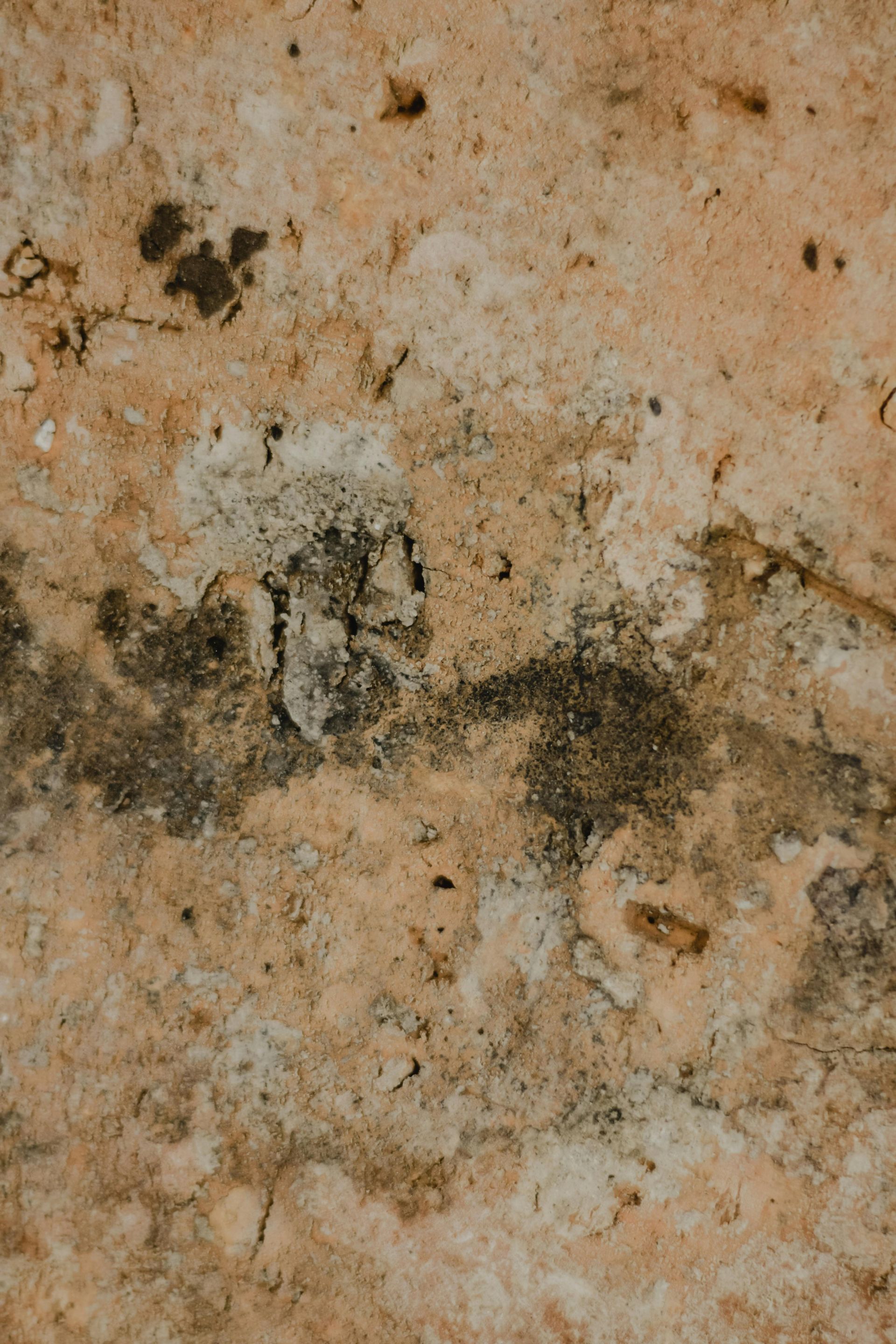
- Crawl space moisture, wet insulation and wood moisture
- Grading and gutters sending water toward the foundation
- Roof flashing, chimney and skylight leaks
- Older electrical panels, ungrounded outlets and DIY wiring
- Aging water heaters and HVAC equipment
- Decks, railings and stairs on sloped lots
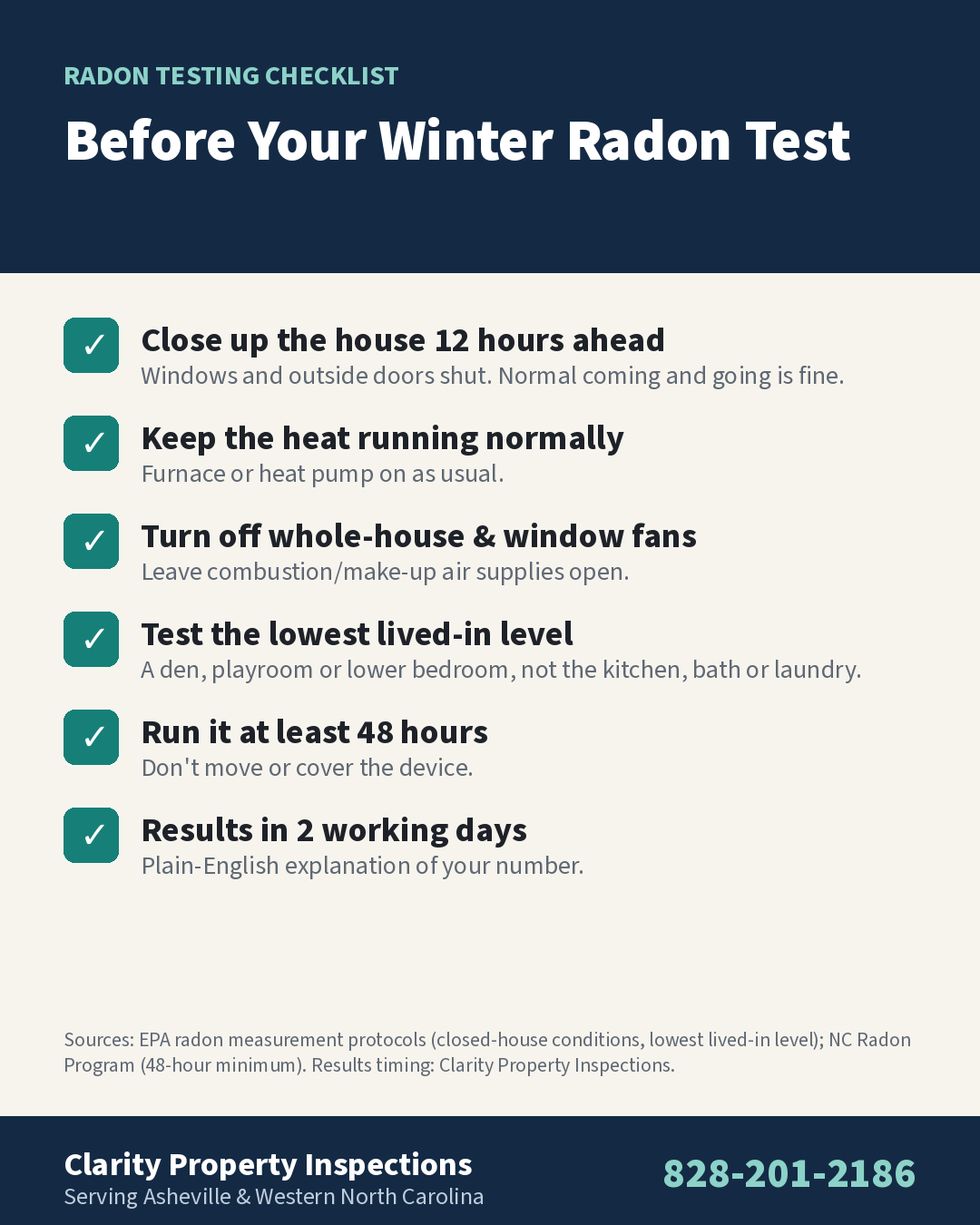
If your home has a well, septic or a long sewer lateral, ask me about water testing, a sewer scope or radon testing at the same visit. Water results take 3 to 4 working days; radon and mold results take 2 working days.
Fix it, price it, or disclose it
Once you have the report, every item lands in one of three buckets.
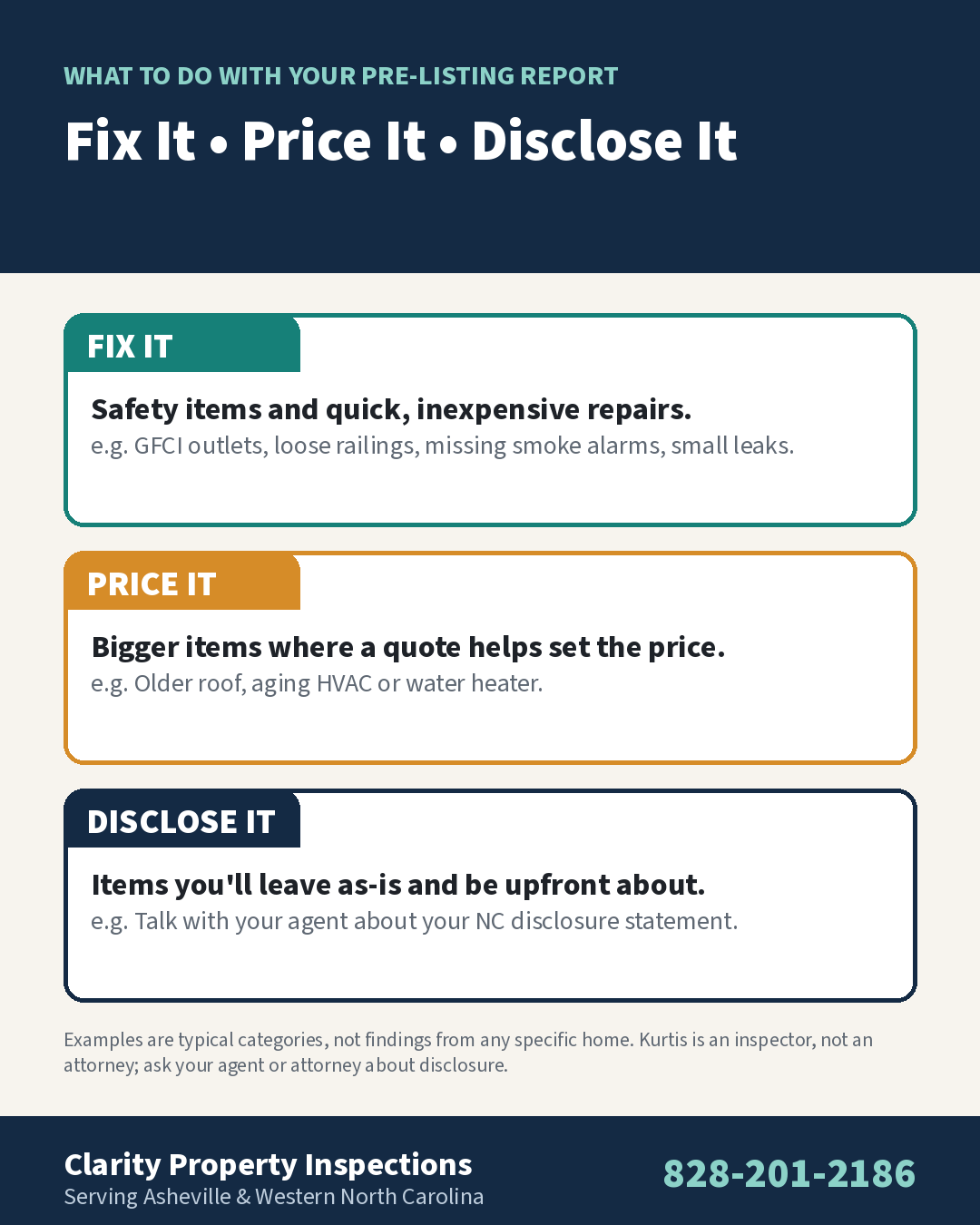
- Fix it: Safety items and quick, inexpensive repairs. These are the ones that otherwise show up on a buyer's repair list.
- Price it: Bigger items, like an older roof or HVAC system, where a quote in hand lets you and your agent price the home realistically.
- Disclose it: Some things you'll choose to leave as they are and be upfront about.
A word on disclosure, because sellers ask me this a lot. Most North Carolina sellers give buyers the Residential Property and Owners' Association Disclosure Statement before an offer (NCREC form). Sellers can check "No Representation," but the NC Real Estate Commission is clear that real estate brokers must disclose material facts they know about, whatever the seller marks (NCREC Bulletin). So talk with your agent or a real estate attorney about how your report affects your disclosures. I'm an inspector, not a lawyer, and I'll always point you to the right person for that.
A simple winter-to-spring timeline
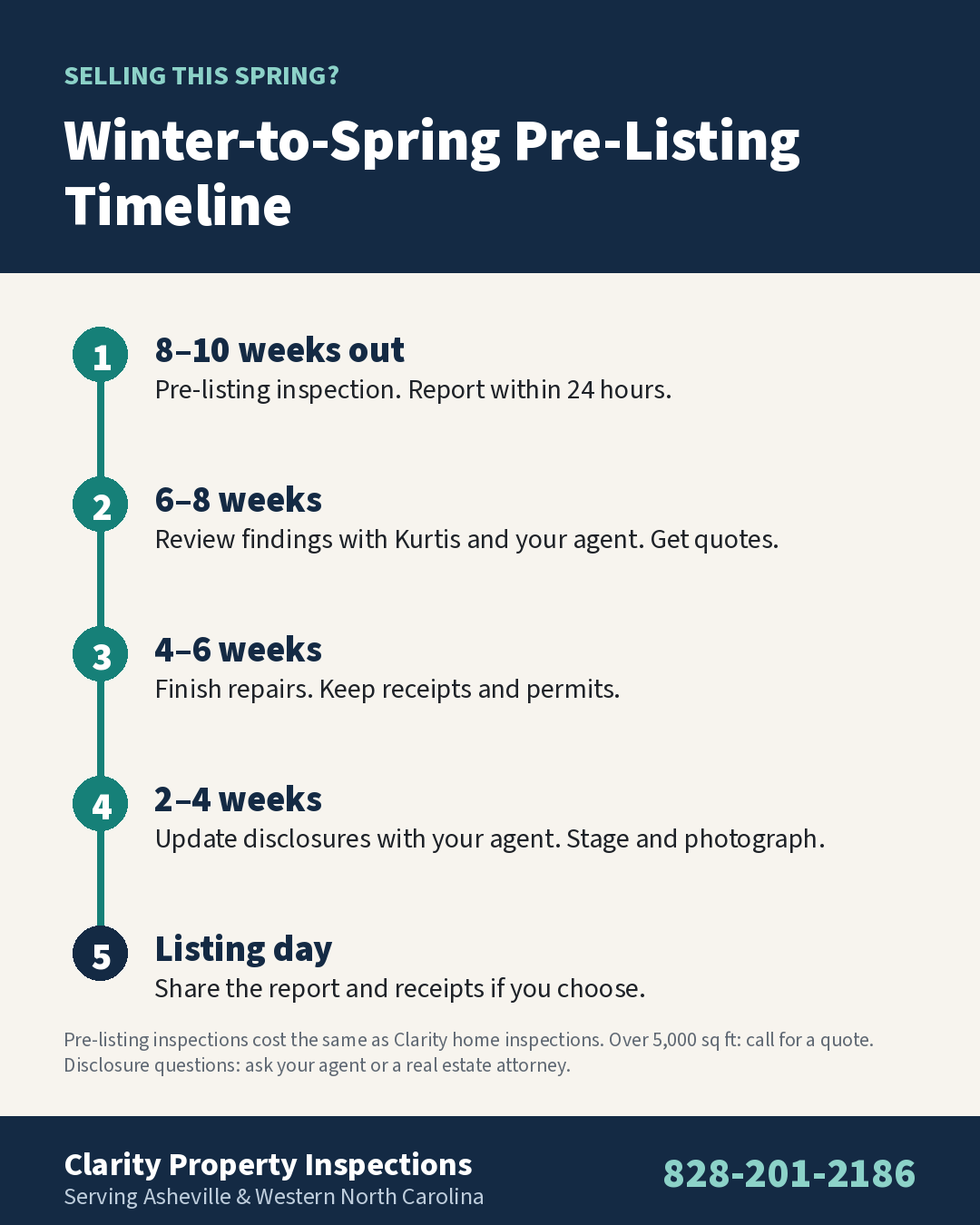
- 8–10 weeks before listing: Pre-listing inspection. Report within 24 hours.
- 6–8 weeks: Review the report with me and your agent. Get quotes.
- 4–6 weeks: Finish repairs. Keep receipts and permits.
- 2–4 weeks: Update disclosures with your agent. Stage and photograph.
- Listing day: Share the report and repair receipts if you and your agent decide to.
For listing agents
The report is easy to read on a phone and easy to share. I'm available to answer questions from you and your seller after the inspection, and I'm glad to walk your seller through findings on a quick call. If you have a spring listing in the pipeline, now is a good time to get on my calendar.
Frequently asked questions
Is a pre-listing inspection worth it?
It lets you find and handle problems before a buyer's inspector does, so repairs and pricing are your decisions instead of last-minute negotiations during the buyer's due diligence period.
How far ahead of listing should I schedule it?
About 8 to 10 weeks gives you time to get quotes and finish repairs before photos and showings. For a spring listing, that usually means a winter inspection.
How much does a pre-listing inspection cost?
It costs the same as a Clarity home inspection, priced by square footage. Current prices are on the price list at clarityinspectors.com/price-list. Homes over 5,000 sq ft, call 828-201-2186 for a quote.
Will the buyer still get their own inspection?
Usually, yes. Most buyers hire their own inspector during due diligence. A seller who has already found and handled issues faces fewer surprises.
Do I have to share my pre-listing report?
Disclosure depends on your situation. North Carolina sellers generally complete the Residential Property and Owners' Association Disclosure Statement, and brokers must disclose material facts they know. Ask your agent or a real estate attorney how your findings affect what you disclose.
Book your pre-listing inspection
I'm Kurtis Lane, NC Home Inspector License #5741, InterNACHI Certified Professional Inspector, and I've worked in construction since 2001. If you're selling this spring, let's get ahead of it now.
- Call or text: 828-201-2186
- Book online: https://app.spectora.com/home-inspectors/my-inspection-company-cee2ccb4d2/schedule
- Learn more: https://www.clarityinspectors.com/pre-listing-inspection
Serving Asheville & Western North Carolina.